Research
I study how early human embryos develop, using genome editing, single-cell genomics, and developmental genetics to uncover the earliest stage in human development.
Why study this area?
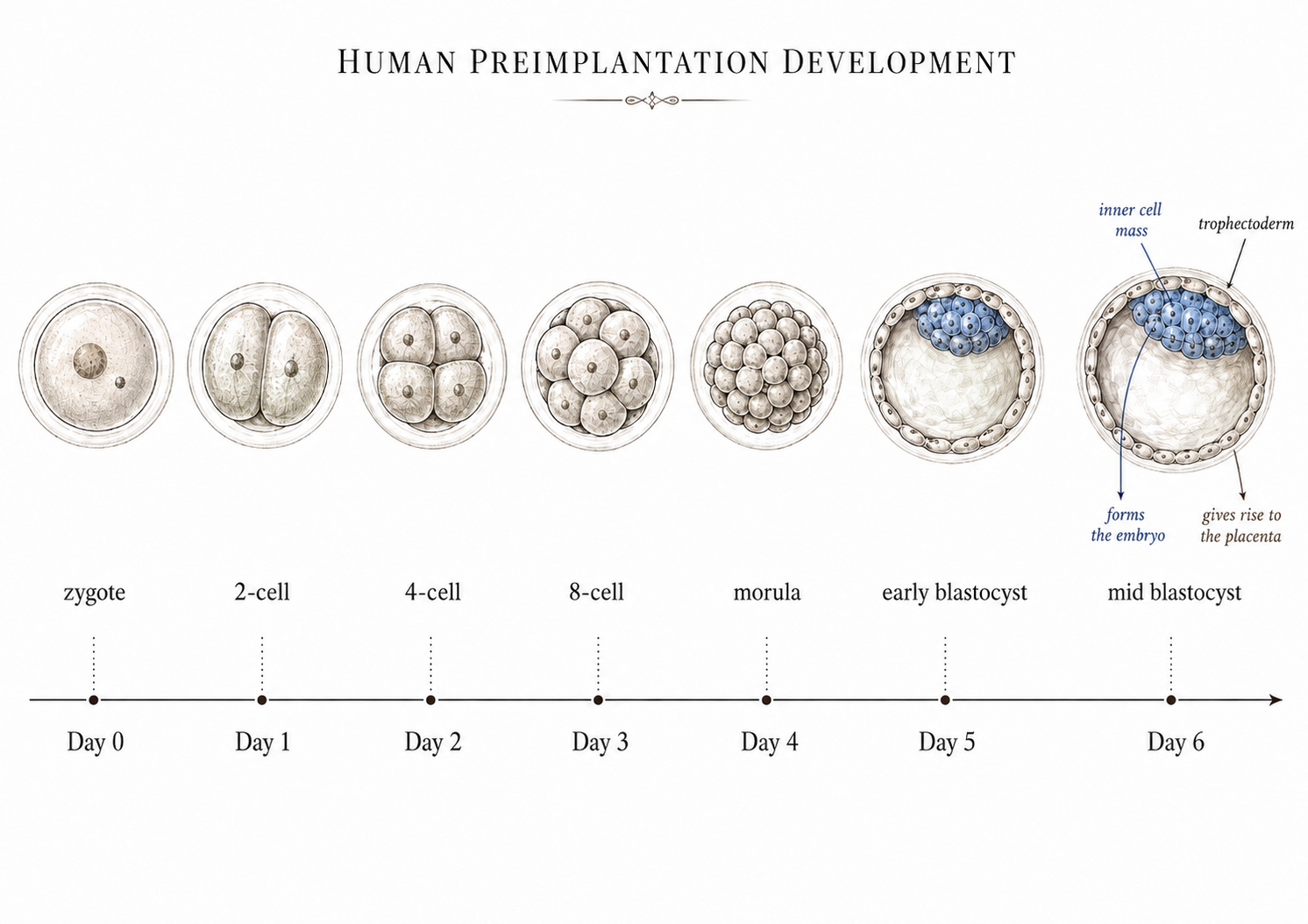
- Human embryos make crucial developmental decisions in the first week to lay down the future of their entire development.
- We do not fully understand which of the 23,000 human genes precisely control those decisions.
- Base editing allows precise testing of individual DNA changes.
- This can reveal how genes guide early development.
- The implications matter for infertility, inherited disease, and responsible genome editing.
Featured work
Base editing reveals an essential role for NANOG in human embryogenesis
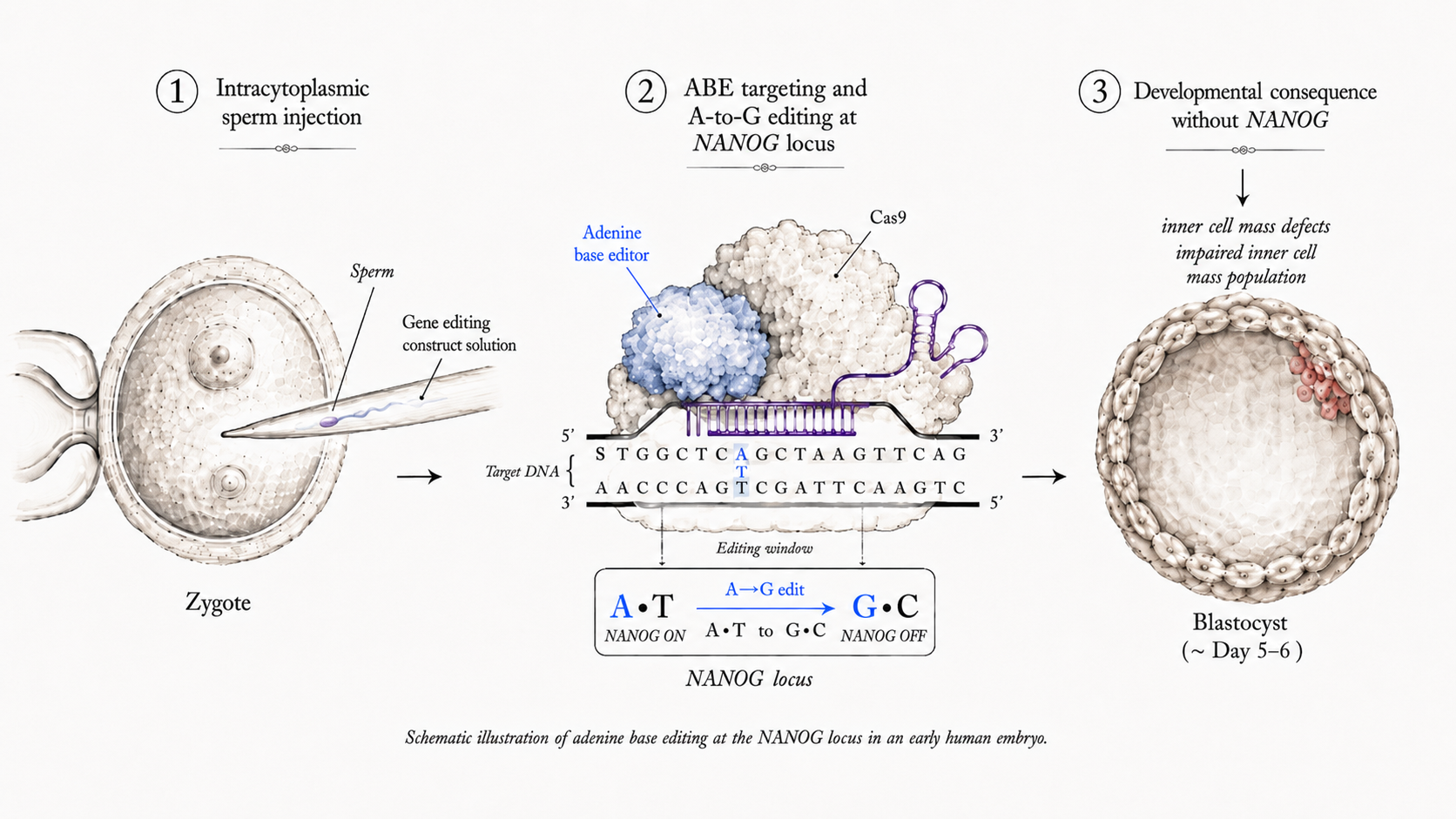
Here, we employ precise single-letter genome editing to test how the gene NANOG helps the early human embryo lay down the foundation of its early cell lineages.
We found that NANOG is essential for guiding the population of cells that will later make the embryonic body. Without it, cells cannot attempt to make bodily tissues.
We also observed that single-letter genome editing resulted in reduced DNA damage compared to previous genome editing methods.
Together, this work carves a new path forward for studying human gene function and development
Base editing – A CRISPR-derived genome editing system that allows precise, single DNA letter changes without cutting the DNA strands apart
NANOG – A human gene, it encodes a crucial transcription factor- a chemical messenger- that directs cells what to do and how to do it.
Early cell lineages – In the first week after fertilisation, the human embryo sets out two populations of cells: 90% of cells at this stage will be destined to form the placenta, with only 10% destined to form the embryo itself
Publications
Bower, O. J., McCarthy, A., Lea, R. A., Alanis-Lobato, G., Zohren, J., Gerri, C., Turner, J. M., & Niakan, K. K. (2021). Generating CRISPR-Cas9-mediated null mutations and screening targeting efficiency in human pluripotent stem cells. Current Protocols, 1, e232. doi: 10.1002/cpz1.232
Halliwell, J. A., Frith, T. J. R., Laing, O., Price, C. J., Bower, O. J., Stavish, D., Gokhale, P. J., Hewitt, Z., El-Khamisy, S. F., Barbaric, I., & Andrews, P. W. (2020). Nucleosides Rescue Replication-Mediated Genome Instability of Human Pluripotent Stem Cells. Stem cell reports, 14(6), 1009–1017. https://doi.org/10.1016/j.stemcr.2020.04.004
 Oliver Bower, Ph.D.